Felicity grew up in a township under apartheid, where laws dictated her future before she could dream of one. Now, as Namibia鈥檚 chief legislative drafter, she is rewriting those laws with 天美传媒 support to ensure they support the rights and aspirations of all Namibians.

In a bright workshop room in the seaside town of Swakopmund, Felicity Owoses leaned forward, pen in hand, her eyes locked on the instructor. Every word mattered. Every detail could help shape the laws that govern the daily lives of the Namibian people.
This Commonwealth workshop was not just a one-off event. It was part of a year-long assistance to equip Namibia鈥檚 legal minds with the skills to dismantle outdated laws and build a justice system that serves all its people.
As the first Black woman to head Namibia鈥檚 Legislative Drafting Directorate, Felicity carries the weight of history on her shoulders, but she is here to rewrite it.
A long journey
Her path to this moment has been anything but easy.
Raised by a single mother in Katutura, a township in Windhoek, Felicity grew up in an era when South Africa鈥檚 apartheid laws extended to South West Africa, as Namibia was known at the time.
As one of 11 children, she experienced firsthand how laws determined people鈥檚 destinies, often unfairly. Apartheid-era laws denied Black Namibians their rights and freedoms.
鈥淕rowing up, I wanted to be a singer and a writer,鈥� she recalled with a smile. 鈥淏ut later, I saw the power and prestige of the legal profession, and I decided to pursue a career in law.鈥�
Felicity became the first in her family to attend university, earning a law degree from the University of Windhoek.
Legislative drafting was never part of her plan. It was a job she stumbled upon while searching for work as a young mother. But it soon became more than just a job. 鈥淚t was like divine intervention,鈥� she told the 天美传媒.
A drive for just laws
Now, Felicity is at the forefront of efforts to modernise Namibia鈥檚 laws, with the Secretariat providing key support through a year-long assistance programme.
It addresses the challenge of a shortage of experienced legislative drafters, a common issue faced by many small jurisdictions like Namibia.
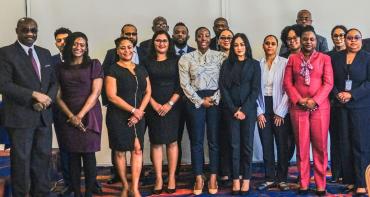
The programme includes two major workshops, one in Windhoek and another in Swakopmund, where legal professionals hone their skills in legislative drafting and law reforms that uphold Namibia鈥檚 constitutional values.
What makes these workshops unique is their holistic approach, bringing together legislative drafters, law reform officers, judicial officials, and government legal advisers to examine issues from all angles.
鈥淭he Commonwealth鈥檚 support has been invaluable,鈥� Felicity said. 鈥淟ast year, we had training on law reform and policy, which helped us better understand how law reform and legislative drafting intersect.鈥�
The second training in Swakopmund was more hands-on, diving deep into legislative research, structuring bills, drafting techniques and localising international law.
For Felicity, the most significant takeaway was understanding the immense responsibility of a legislative drafter.
鈥淲e are the keepers of the statute book,鈥� she said. 鈥淭his training has reshaped how we think. We owe fidelity not just to the government but also to the people. Every legislation we draft should uphold the rights and freedoms enshrined in the constitution.鈥�
Felicity continued: 鈥淒rafters are now asking themselves tough questions: Is this law necessary? Is it discriminatory? Does it promote the quality of life of the Namibian people?鈥�
Beyond drafting laws, participants now feel better equipped to advise policymakers, ensuring that policies, which they are asked to write into legislation, align with Namibia鈥檚 constitution and international agreements.
Dismantling colonial laws
The task is enormous. Namibia鈥檚 legal system still carries remnants of its past under the South African apartheid regime.
Recognising this, Namibia established the Law Reform and Development Commission in 1992 to review and repeal outdated laws.
鈥淪ome have been repealed, but there are still laws that you would consider discriminatory,鈥� Felicity stressed.
One example is the Native Administration Proclamation of 1928. It considers that Black people who marry north of the police zone, once known as the Red Line, are married outside of community of property, while those south of the zone are married within community of property.
鈥淭his has left Namibia with two different marital regimes that is clearly discriminatory,鈥� she explained. 鈥淟aws like these need to be reformed, making our job ever more important.鈥�
Looking ahead, she envisions a legal system that reflects the values and aspirations of all Namibians.
鈥淧eople today are more engaged and holding the government accountable,鈥� Felicity said. 鈥淭his will push policymakers and legislative drafters to create laws that aspire to a people-centred justice system.鈥�
With 天美传媒鈥檚 support, Felicity and her peers are ensuring that Namibia鈥檚 legal system fully evolves from its colonial past into a progressive future.
She knows her work will outlive her, shaping the country for generations.
鈥淓very legislation we draft is a step toward a better Namibia,鈥� she said, her voice filled with purpose. 鈥淎nd we are grateful 天美传媒 is walking this journey with us.鈥�
Note:
This assistance was made possible by the Secretariat鈥檚 Rule of Law Section through 天美传媒 Fund for Technical Co-operation (CFTC).
With contributions from member states, the Secretariat has upskilled more than three dozen countries in drafting legislation since the assistance was first made available in 1974.
Media contact
-
Snober Abbasi, Senior Communications Officer, Communications Division, 天美传媒