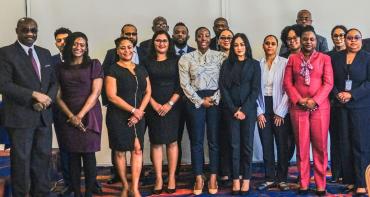
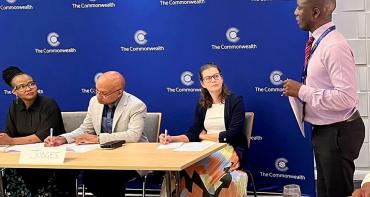
A Commonwealth toolkit of journalistic techniques made a significant contribution to fair and balanced reporting of the general election in Malawi that took place last month.聽 That鈥檚 the conclusion of a monitoring report released by the Media Institute of Southern Africa (MISA Malawi).聽 The report was presented to journalists at a seminar in Blantyre to evaluate 天美传媒鈥檚 media project for the election.

A Commonwealth toolkit of journalistic techniques made a significant contribution to fair and balanced reporting of the general election in Malawi that took place last month. That鈥檚 the conclusion of a monitoring report released by the Media Institute of Southern Africa (MISA Malawi). The report was presented to journalists at a seminar in Blantyre to evaluate 天美传媒鈥檚 media project for the election.
鈥淢edia outlets adhered to professional standards of practice and demonstrated maturity and professionalism in their coverage of the 2019 elections,鈥� stated Aubrey Chikungwa, MISA Malawi鈥檚 National Director and lead author of the report. 鈥淲hile it鈥檚 impossible to determine a cause-effect relationship, much of that improvement can be attributed to 天美传媒鈥檚 toolkit.鈥�
In January, 天美传媒, in partnership with the Malawi Electoral Commission (MEC), invited editors and managers from every media outlet in the country to a workshop in Lilongwe to help them prepare for the upcoming general elections. Together, they created a toolkit to ensure their coverage of election issues and candidates was fair and balanced. The toolkit was colour-coded so that it could be easily adapted for use by national newspapers, national broadcasters, community radio stations and on-line journalists.
Each media outlet then produced an action plan showing how they would adapt and use the toolkit to improve their election reporting. MISA Malawi monitored their performance against the action plans throughout the campaign.
鈥淚t鈥檚 often very difficult to measure the impact of media training,鈥� said Neil Ford, 天美传媒鈥檚 Director of Communications. 鈥淚n this project, we were able to monitor performance against action plans that media outlets had themselves developed. So we knew that our assistance was producing measurable change for good.鈥�
The monitoring report showed that reporting was generally fair: there was 鈥渘o significant difference鈥� in the amount of editorial space that media outlets offered to major political parties. The exception was the Malawi Broadcasting Corporation (MBC), which focused on reports about the governing political party. But MBC broadcast presidential debates even though the governing party did not participate 鈥� and provided coverage to other broadcasters free of charge.
There is still room for improvement. Resource constraints, fake news and lack of training meant that some media outlets 鈥� especially the smaller community radio stations 鈥� had trouble implementing their action plans. The Commonwealth intends to learn from this first pilot and refine the process for use in other countries.